Decoding New Logistics Pathways for Chinese Enterprises to Tap into Central Asia
If there is a market where trade volume with China has surged more than 200 times over the past three decades; if there is a region regarded by major economies as a critical energy and mineral corridor, an emerging consumer growth pole, and an interconnection hub of Eurasia – then it undoubtedly stands at the crossroads of era-defining opportunities.
This is Central Asia. In 2024, the trade volume between China and the five Central Asian countries hit 94.8 billion US dollars, with China firmly maintaining its position as their largest trading partner. Among them, Kazakhstan and Uzbekistan, the “twin engines” of the regional economy, have contributed the vast majority of the growth and become the most concentrated destinations for Chinese manufacturing and investment.
Yet the current global landscape is far more complex than the numbers suggest. Against the backdrop of a “world intertwined with changes and turmoil”, this ancient crossroads of Central Asia is undergoing a profound geopolitical and economic reshaping.
In this context, choosing a reliable, efficient logistics channel with a thorough grasp of local rules is no longer merely a cost consideration, but a core strategic capability to navigate market uncertainties and translate the national-level economic and trade momentum into tangible corporate growth.
I. Twin-Engine Drive: Uncovering Definite Demand in the Kazakh and Uzbek Markets
Beyond macro narratives, the growth of the Central Asian market, especially in Kazakhstan and Uzbekistan, is fueled by solid endogenous dynamics. Understanding these dynamics is a prerequisite for seizing business opportunities.
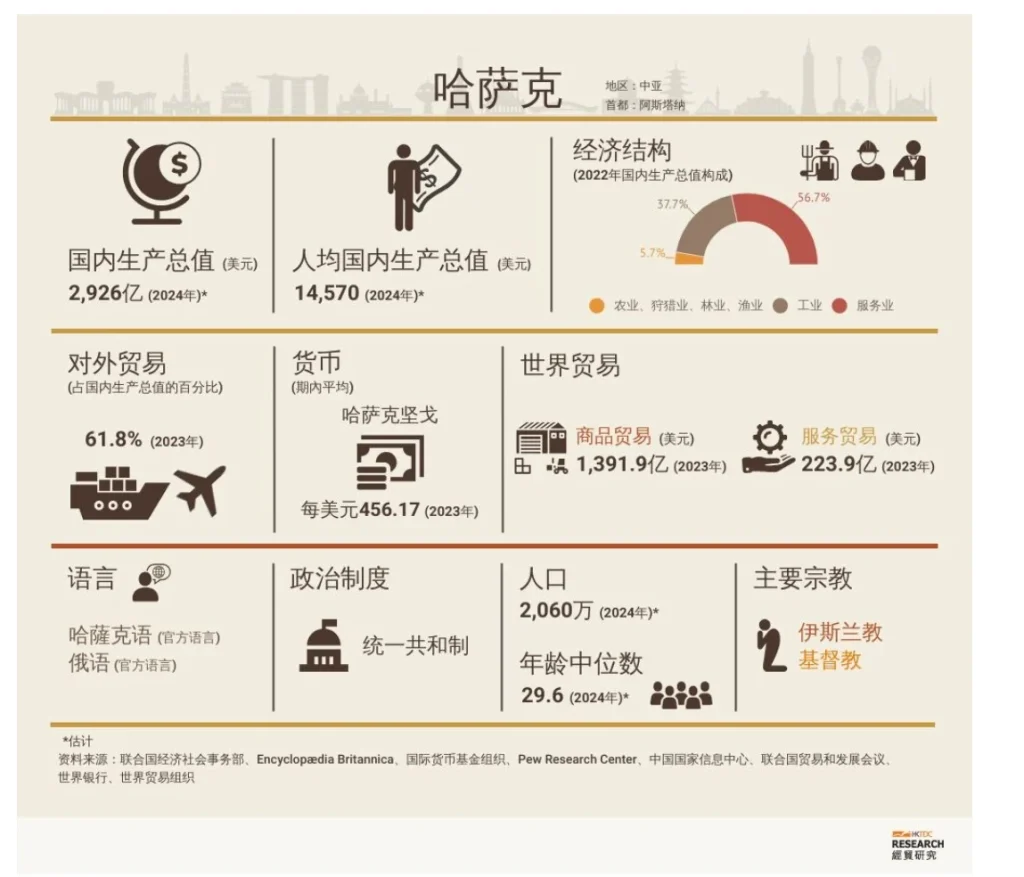
Kazakhstan: A Model of Infrastructure Development and Consumption Upgrade
As the largest economy in Central Asia, Kazakhstan has a per capita GDP exceeding 13,000 US dollars and is on a clear path of consumption upgrade. Its market features are distinct:
- Booming e-commerce: The e-commerce market registers an annual growth rate of up to 33%, with local giant Kaspi competing head-to-head with global platforms.
- Refined demand: Consumers are no longer satisfied with basic commodities, but have a strong demand for products with brand endorsement, segmented functions (e.g., toothpaste with specific effects, household supplies) and design aesthetics.
- Integrated infrastructure and industrial development: The construction of new energy and digital economy, coupled with sustained real estate development, continuously drives import demand for building materials, engineering machinery, smart home products and the “three new export staples” (new energy vehicles, lithium batteries, photovoltaic products).
Uzbekistan: A Promising Player Leveraging Demographic Dividend and Reform & Opening-Up
Home to nearly 38 million young people, Uzbekistan has unleashed enormous vitality since the launch of reforms in 2016.
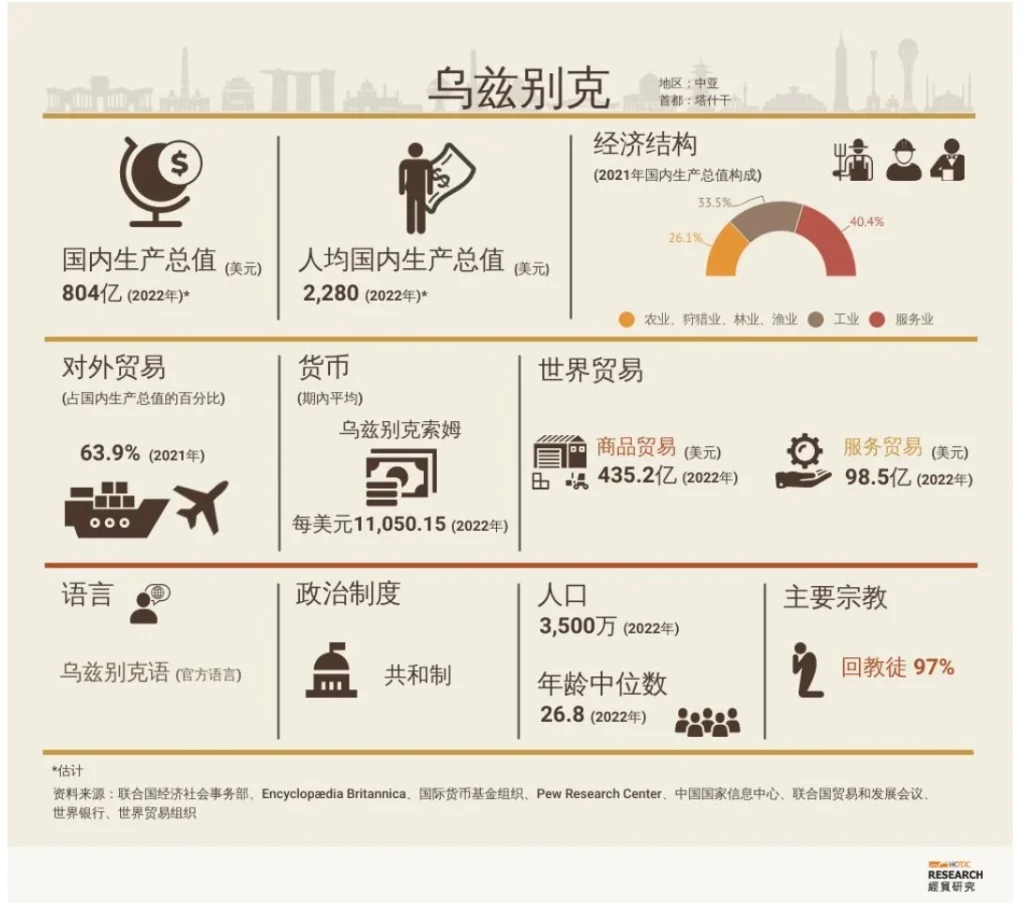
- Leading e-commerce growth: The e-commerce market achieved a compound annual growth rate of 122% from 2021 to 2024, and is expected to maintain a high growth rate of over 40% in the coming years.
- Accelerated industrialization: The government is vigorously promoting industrial upgrading in textiles, agricultural modernization and other sectors, leading to a surge in demand for production equipment and technologies.
- Improved trade facilitation: With the implementation of policies such as mutual visa exemption with China, personnel and business exchanges have become increasingly close.
The two markets share a common trait: a huge gap between robust demand and insufficient local supply – a perfect stage for “Made in China” combined with “China’s efficiency”.
II. A Logistics Anchor Amid Shifts: Why Channel Selection Matters More Than Ever
The current global situation has amplified the risks and value of logistics supply chains. For the Central Asian market, three key trends have made professional logistics services indispensable:
- Demand for diversified trade routes: Beyond traditional transit lines, new intra-regional and cross-regional channels are taking shape. For example, the “Unified Customs Procedures for the Central Asian Region”, aimed at improving regional connectivity efficiency, is advancing, and the Trans-Caspian International Transport Route linking China and Europe is becoming increasingly active. Enterprises need partners capable of flexibly integrating multiple transportation solutions to avoid single-route risks.
- Dual pressure of timeliness and cost: The rapid growth of the consumer market and e-commerce competition have raised higher requirements for stock preparation speed and inventory turnover. Meanwhile, geopolitical factors may lead to cost fluctuations in traditional transportation methods. Special logistics lines are a clear testament to the market’s growing demand for efficient air freight.
- Elevated compliance thresholds: With the deepening of economic and trade exchanges, customs and tax supervision in various countries has become more standardized. From Kazakhstan’s GOST certification to the standardization of customs clearance documents, compliance has become an unshakable rule for market entry and long-term operation. Any delay in customs clearance may directly result in lost business opportunities and cost losses.
III. Deep Cultivation and Empowerment: The Core Value of Meest China’s Central Asia Channel
Faced with market opportunities and challenges, Meest Global Special Line has leveraged its profound understanding of the Central Asian hinterland and in-depth resource cultivation to build a “value channel” for Chinese enterprises that goes far beyond mere transportation.
Strength 1: Dual Customs Clearance and Local Compliance Capabilities Based on In-Depth Geopolitical Cultivation
Logistics, in essence, is the fulfillment of trade, and customs clearance is a critical node in this process. Meest’s strengths are rooted in long-term insights into the regional “soft environment”. We not only provide door-to-door services from Chinese ports to destinations in Kazakhstan and Uzbekistan, but also offer reliable dual customs clearance solutions backed by a professional local team. We have a thorough grasp of the constantly updated customs regulations, certification requirements and tax practices in Kazakhstan and Uzbekistan, enabling us to help enterprises front-load and transparentize compliance costs, maximize the smooth clearance of goods and avoid detention risks – a core guarantee for navigating the current complex trade environment.
Strength 2: Diversified Transportation Solutions Aligned with Market Rhythms
For fast-moving consumer goods and fashion categories in Kazakhstan’s e-commerce market, we have optimized air/express land transportation links, closely connecting consumption hubs such as Almaty and Astana to help enterprises seize market opportunities. For mechanical equipment and bulk building materials required for Uzbekistan’s industrialization, as well as new energy products in demand in both countries, we provide cost-effective logistics solutions for large cargo, effectively connecting with the China-Europe (Central Asia) Railway Express network to strike a stable balance between timeliness and cost.
Strength 3: End-to-End Visualized Management from China to Central Asia
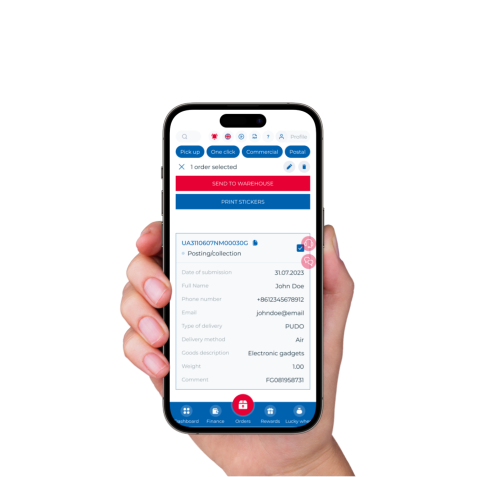
We understand that controllability means a sense of security. Meest’s digital system enables real-time visualization of the entire logistics status, from the departure of goods from China’s consolidation warehouses, through ports, to the final delivery address. Enterprises can keep track of inventory dynamics in real time, accurately plan marketing and sales activities, and greatly improve the efficiency of supply chain decision-making. In addition, we are continuously strengthening warehousing and distribution capabilities at major nodes in Central Asia, providing enterprises with flexible overseas warehouse stock preparation options and truly realizing “shipping from one country, radiating the entire region”.
This means that enterprises entering the Kazakh or Uzbek market today may gain more convenient access to the entire Central Asian region tomorrow. Choosing Meest is not just choosing a logistics provider, but a partner who discerns trends, cultivates local markets deeply, and can accompany your business to navigate economic cycles and achieve sustained growth.
As the ancient Silk Road is re-illuminated by modern railways, highways and digital supply chains, Chinese enterprises are ushering in a “Age of Discovery” for Central Asia. In this era, the fastest ship may not reach the final shore; only the fleet that knows the waterways best and can weather the storms will return with a full cargo.
Meest Global Special Line is ready to be your reliable ark for sailing toward definite growth in Central Asia.