Vyacheslav Lysenko, a shareholder of Meest, stated that e-commerce is crucial for the survival of enterprises.
Vyacheslav Lysenko, a shareholder of Meest, in an interview with the Kyiv Post, talked about the logistics group’s international strategy, European expansion, and the future of e-commerce logistics.
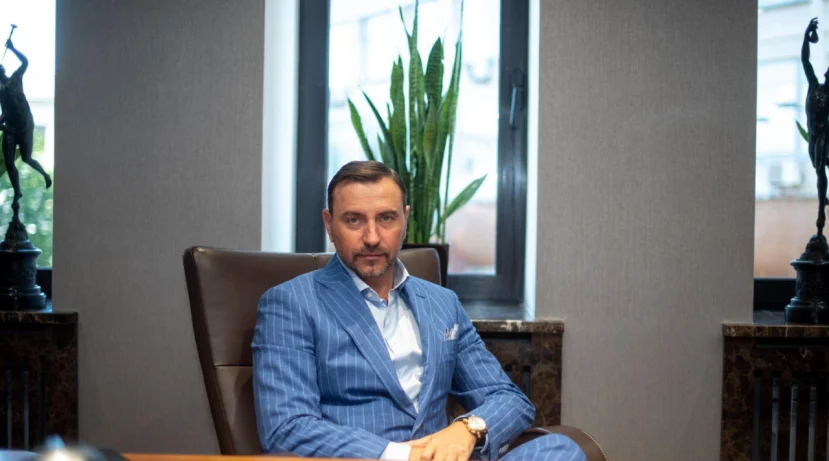
Vyacheslav Lysenko, a shareholder of Meest, was interviewed by the Kyiv Post in the company’s office. (Image provided by Meest’s press service)
The logistics group Meest has become one of the global players in Ukraine’s postal and e-commerce delivery sectors. Under the pressure of the war, the company continues to invest in domestic operations while expanding internationally.
Founded in 1989 in Canada by Ukrainian emigrants, Meest started as a courier service from Canada to Ukraine and has now grown into a global logistics group. Meest operates in the postal service market in the B2B, B2C, and C2C sectors, shipping approximately 30 million parcels to over 70 countries/regions worldwide each year.
According to Forbes Ukraine, the company operates two logistics centers in Ukraine: the main hub in Lviv near Kyiv’s Zhuliany Airport, and 61 smaller hubs across the country.
A key part of Meest’s international operations is Meest China, which was established in 2014 and handles the transportation of parcels and goods from China to Ukraine.
The Kyiv Post interviewed Vyacheslav Lysenko, a shareholder of Meest China. According to Lysenko’s profile on the website of the Kyiv International Economic Forum, he has been engaged in business activities in China since 1994, with long-term involvement in cross-border logistics, customs supervision, and foreign trade.
In a brief interview, he discussed how logistics companies operate under the competitive pressure from large enterprises.
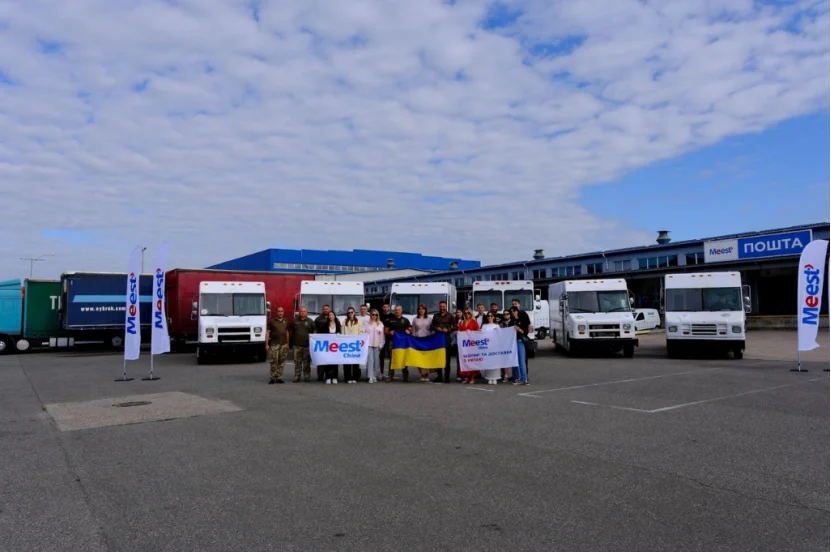
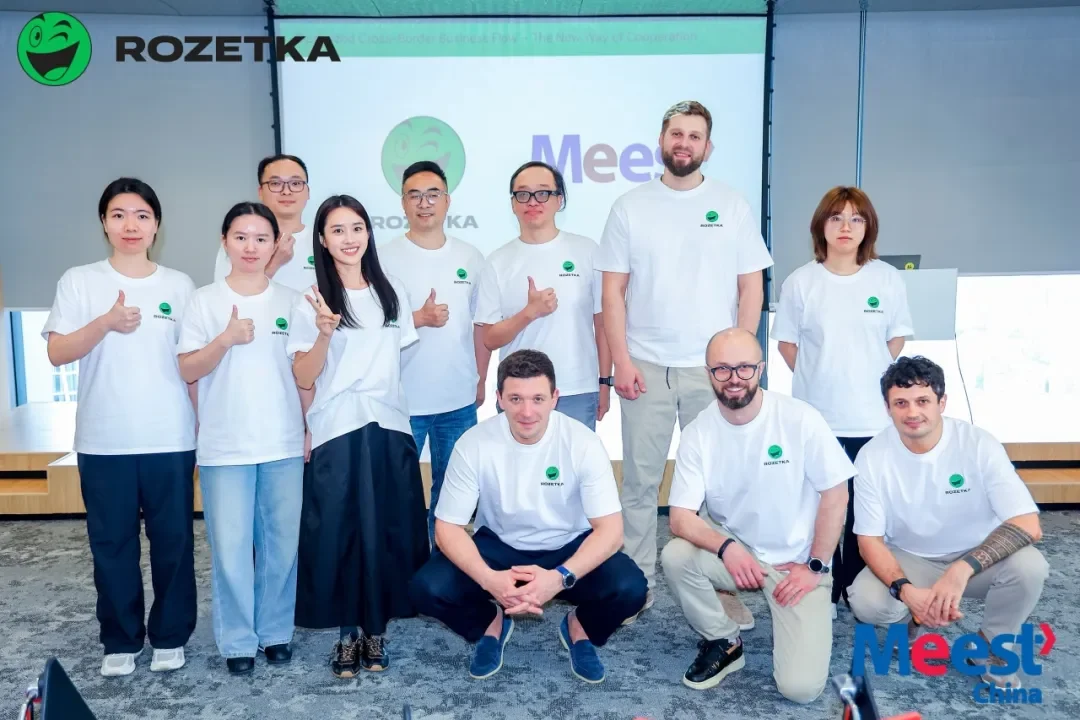
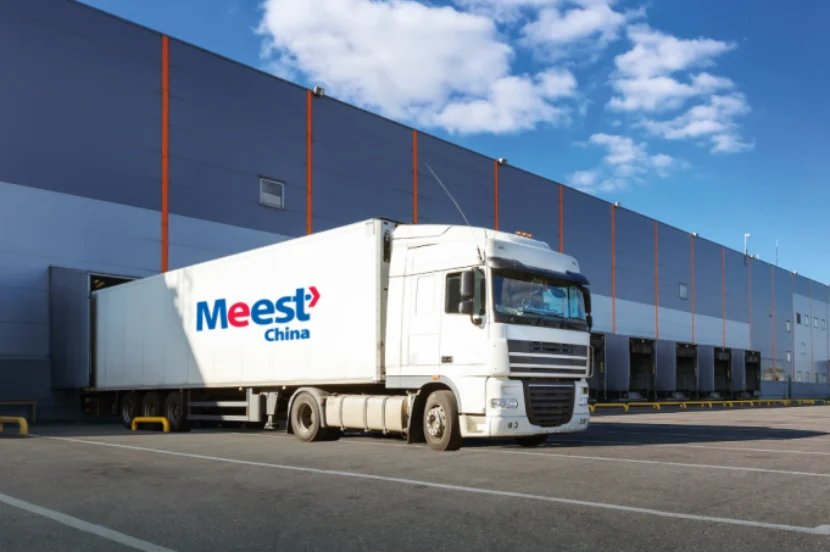
Employees of Meest and its Chinese branch stand in front of the company’s logistics facilities, holding the Ukrainian national flag and the company banner. (Image provided by Meest)
Kyiv Post (KP): Meest, a company headquartered in Ukraine with global operations, has attracted our attention. What is the secret behind your company’s successful strategy?
Vyacheslav Lysenko (VL): I believe Meest has never been a local company but an international one. We have always focused on the international market, and we still do so today. Currently, the company is expanding in Europe and other countries.
We currently provide products and services to 94 countries/regions. However, our core customers are concentrated in about 30 major countries/regions. Ukraine is just one of them, not the only or primary one.
If you focus on the international market, international business will grow. If you focus on the local market—like Nova Poshta, for example—you can build a very large local enterprise. That’s their strategy.
Currently, we provide last-mile delivery services in Poland and other European countries. Our goal is to launch last-mile delivery operations in seven other countries. This is an important step for us to enhance our competitiveness with global logistics enterprises and get closer to our customers.
All major international platforms—Alibaba, Next, Amazon—are our key partners. We handle customs clearance for their customers. Every day and every month, we strive to explore new markets and expand our international business footprint.
Given geopolitical tensions, tariffs, and the formation of new trade blocs, do you think such uncertainties will affect your business?
Large e-commerce platforms often build logistics systems only for large markets. For example, Chinese companies, including Alibaba, rely heavily on their own logistics enterprises such as SF Express and focus their business on large markets like the United States or Germany.
But large companies are often not interested in small markets. Countries like Romania or Bulgaria are usually not their priorities.
That’s where we focus. These markets are underserved but growing. The U.S. market is extremely competitive. The Bulgarian market has less competition. Our focus is on markets where there are no strong competitors.
In the current environment of uncertainty, what is your view on scaling up?
In the next two years, we plan to expand our business to the Balkans—a total of seven countries, including Romania, Bulgaria, etc.
What advice do you have for companies looking to expand their global business?
This is a difficult question to answer. But personally, I believe that e-commerce is the business model of the future.
In the future, there will be two types of companies—those engaged in e-commerce and those that have gone out of business.